Summer is the time of year when you walk outside and get a face full of web. In July, my typical morning ritual is clasping a hand over my face and waving the other outstretched hand in front of me as I brave the narrow path from my front door to my car door.
Spider activity peaks in the summer in Southern California. In our summer-dry Mediterranean climate, we normally receive less than an inch of rain from June to September. Temperatures routinely reach 90°F in the Santa Ana River Watershed, and it's not uncommon for inland areas to exceed 100°F for sustained periods.
Growing up in the Santa Ana Watershed afforded me the opportunity to hike numerous hills, mountains, and riverside trails. I've taken cuttings of local plants and built a native garden in my front yard. I have hundreds of photos of the local Fremont cottonwoods at various stages of maturity. I track the movement of the local mountain lions at Coal Canyon and record sightings of coyotes, double-crested cormorants, and even white-lined sphinx moths. But spiders? Spiders aren't something I have typically gravitated toward in terms of observation or interest. Well, I'm proud to say that this summer ushered in my arachnid awakening!
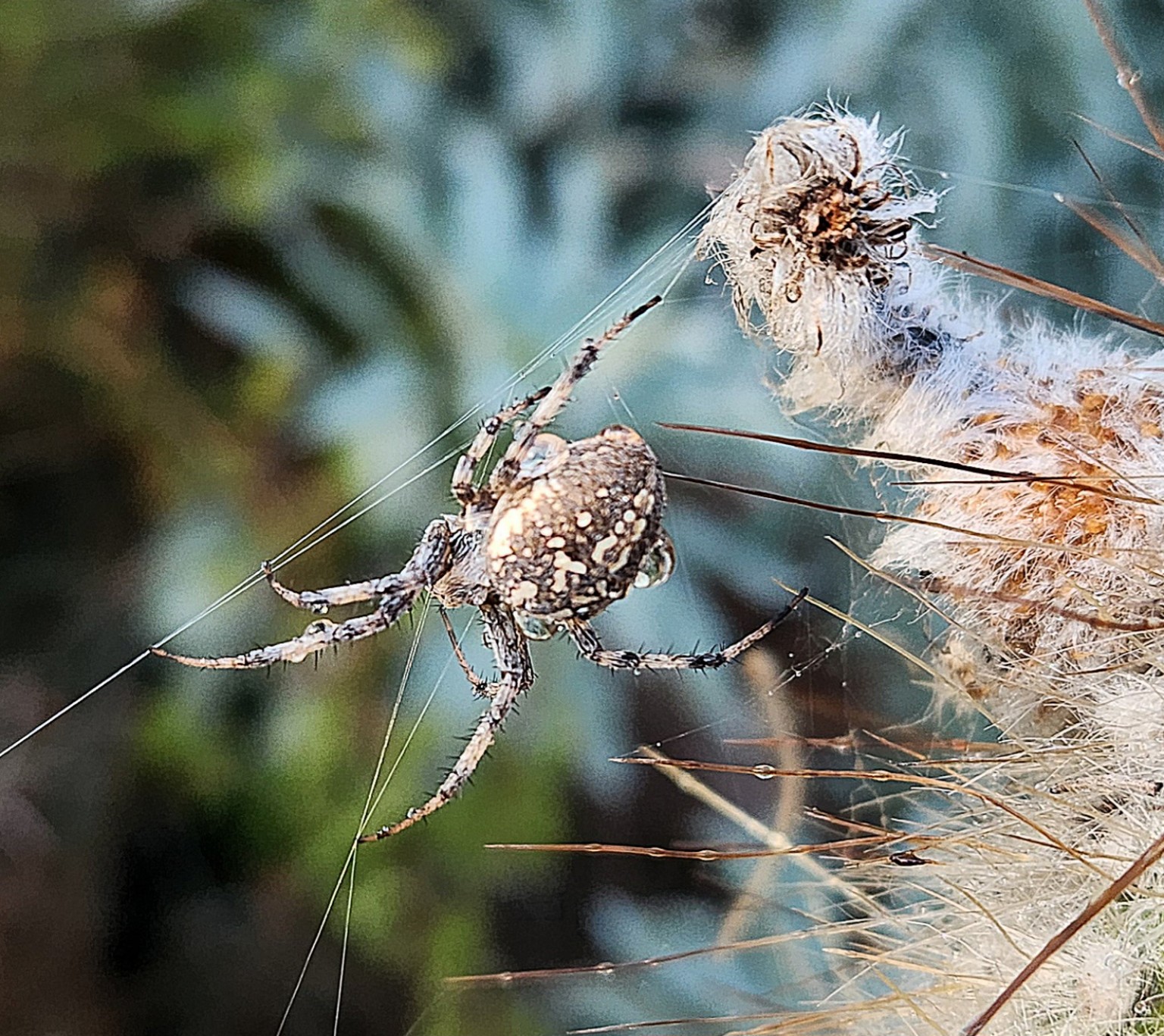
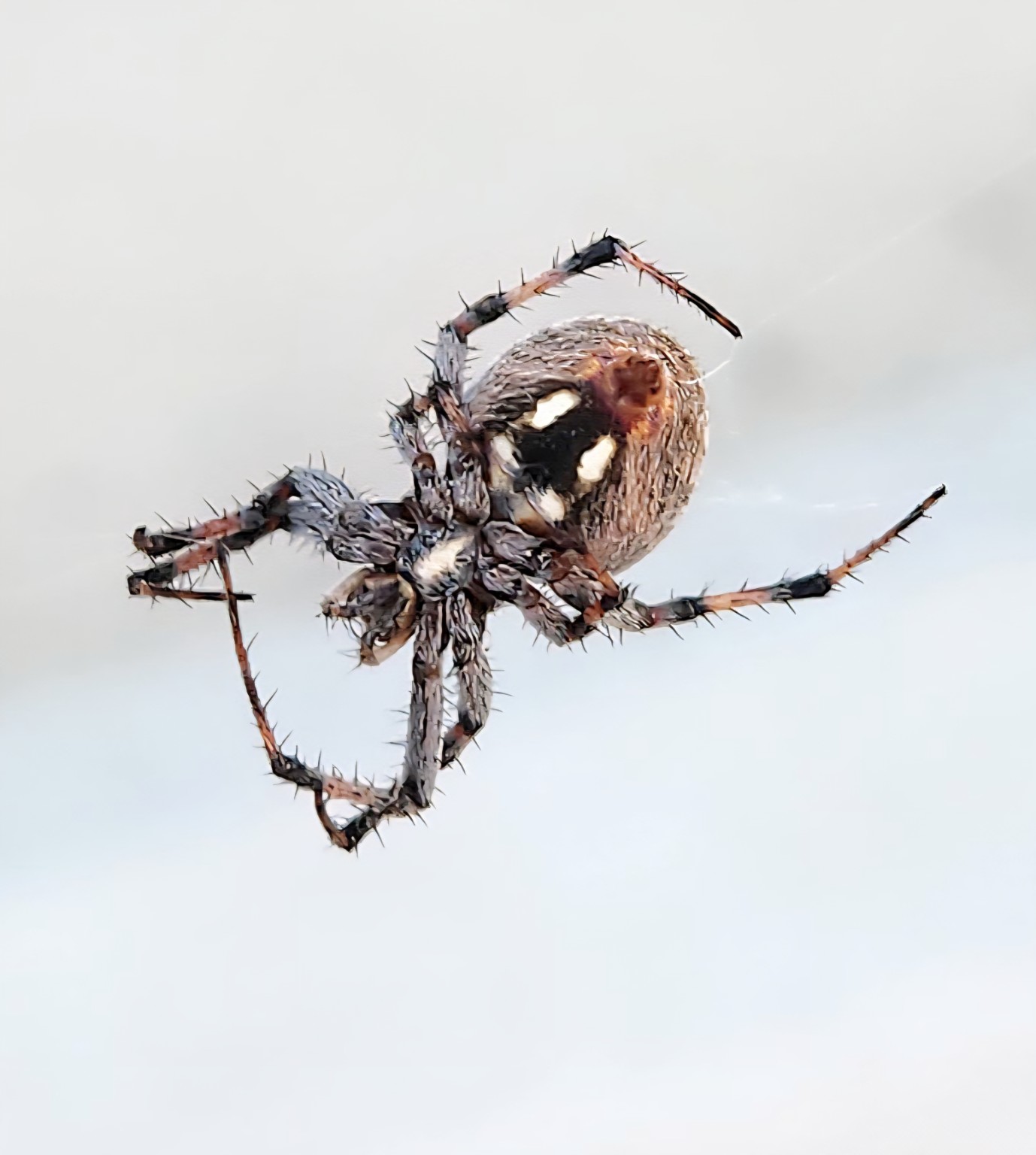
And you know what started it? My nine-year-old niece, Emily. Her captivation with the spotted orb-weaver sparked my own sense of wonder. When I knelt beside her and took the time to look—to really notice what the orb-weaver was doing—I saw the beauty of the mottled-brown arachnid with her banded legs and soft black hairs. Even more fascinating was the spider's patience and tenacity as she floated in the wind, methodically moving up and down, weaving her web in the dwindling light of dusk and preparing for the long night ahead. At that moment, I was hooked!
For the past month, on every evening walk, I've found myself seeking out spiders. I look in crevices and beneath the loose bark of fallen cottonwoods. I look behind walls, under steel cables, and among the native plants in my garden. I've uncovered a treasure trove of activity on my evening strolls, and I'm excited to share the photos I've taken—courtesy of the great natural bounty of the Santa Ana River.
 © Lindsey Thome
I'm usually at the Green River Golf Course around 7 p.m., just as dusk is settling in—the perfect time for spider spotting. I've visited the same spotted orb-weaver Emily found almost daily over the past two weeks, and she's been there on at least seven of those days. It almost feels like visiting a friend now: my constant companion at the bridge.
Yesterday, my daughter and I watched her spin another beautiful web, fastening a silk line to the center, rappelling down to anchor it to a steel beam, and then expertly climbing back up. It was like watching an artisan practice her craft. Given her size and the time of year, we think she's female, so part of our evening ritual has been looking for an egg sac. As a regular visitor to the Santa Ana River, it makes me smile to think I might watch her young weave their own webs next year.
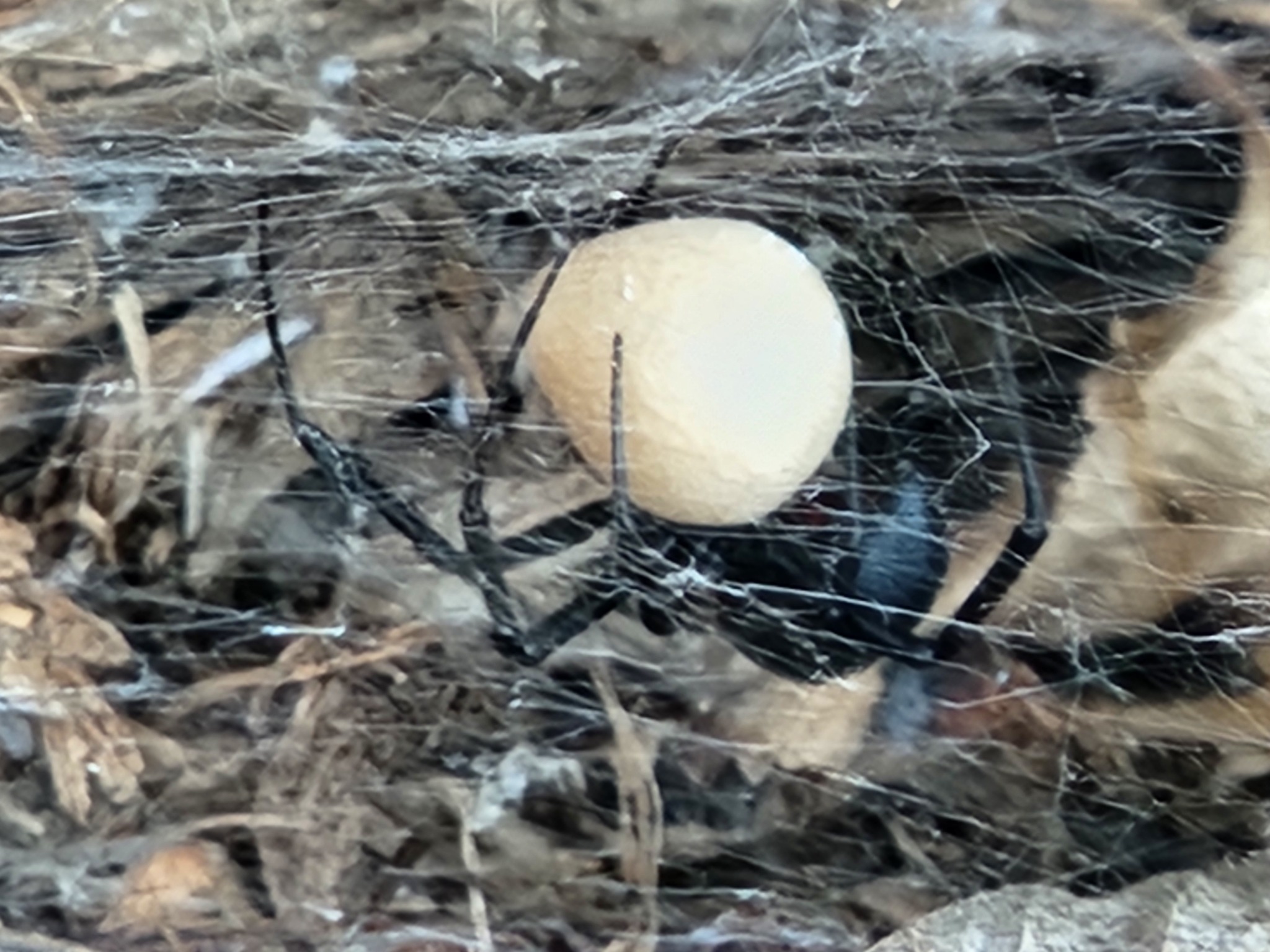
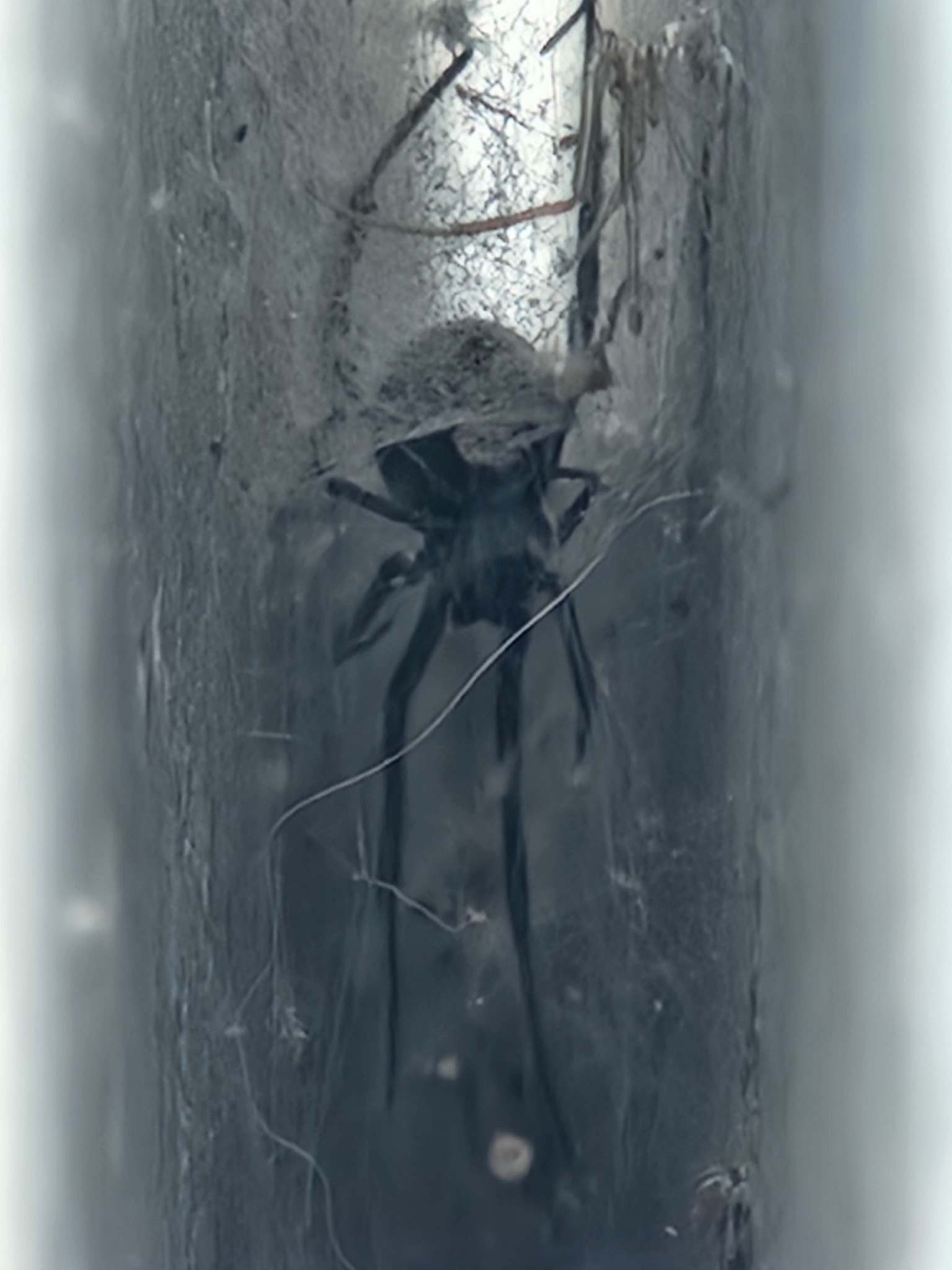
In the spirit of noticing, I began seeking out other arachnid activity and got some amazing photos. Near the orb-weaver, a crevice weaver had tucked herself into a crack in the concrete. I found her there a couple of times, but she has since disappeared. I'm glad I stopped to take the photograph when I did.
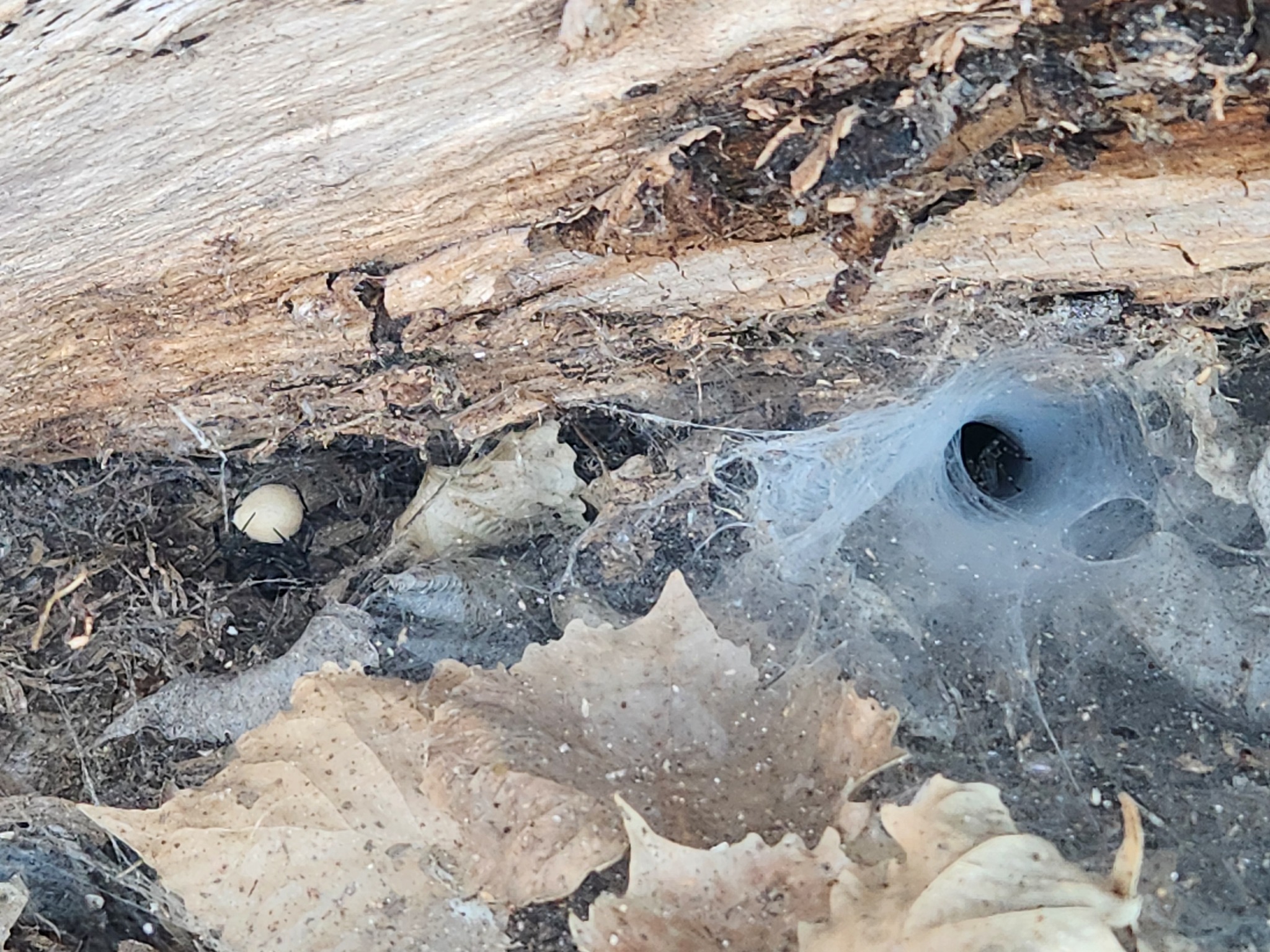
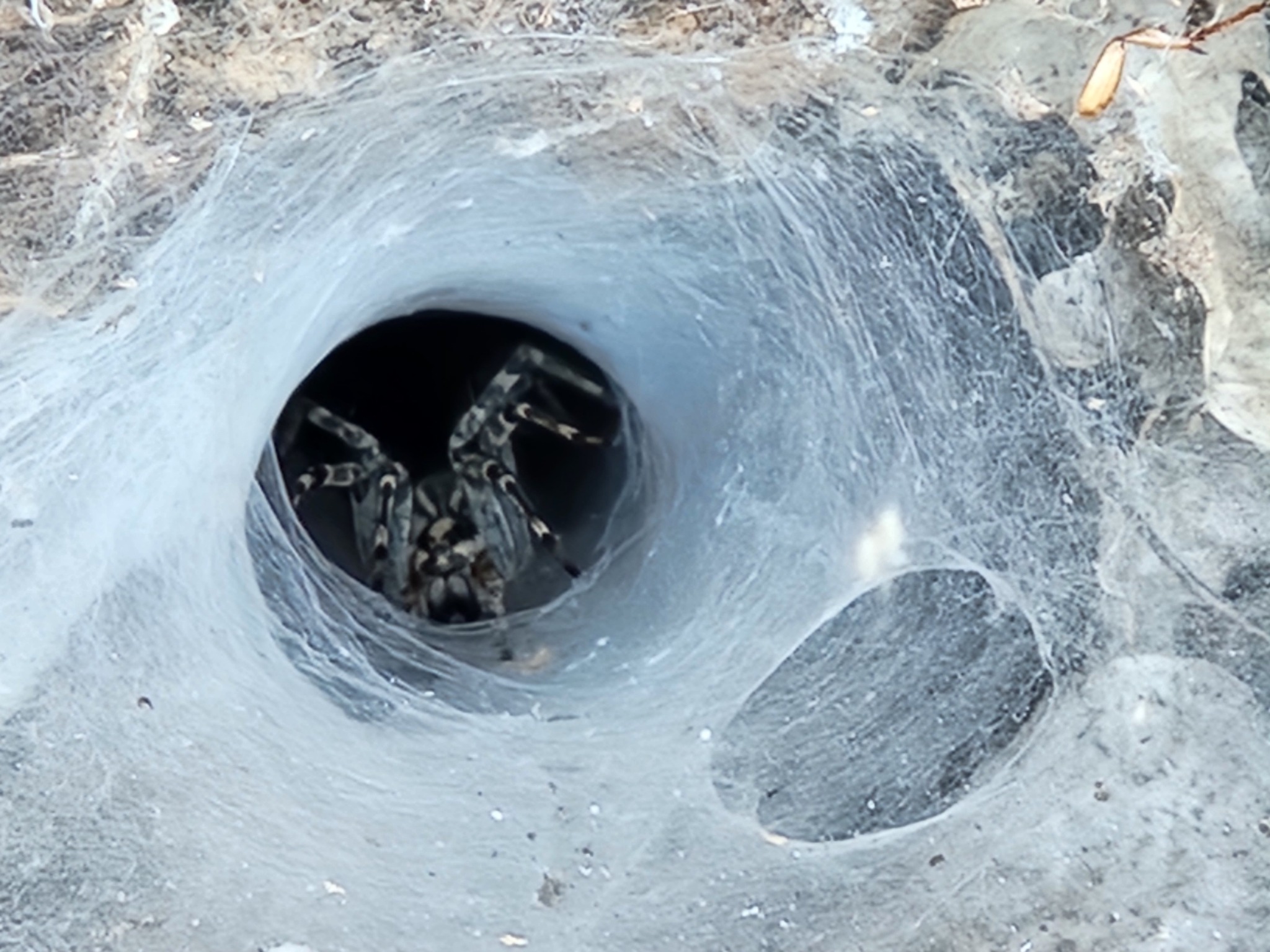
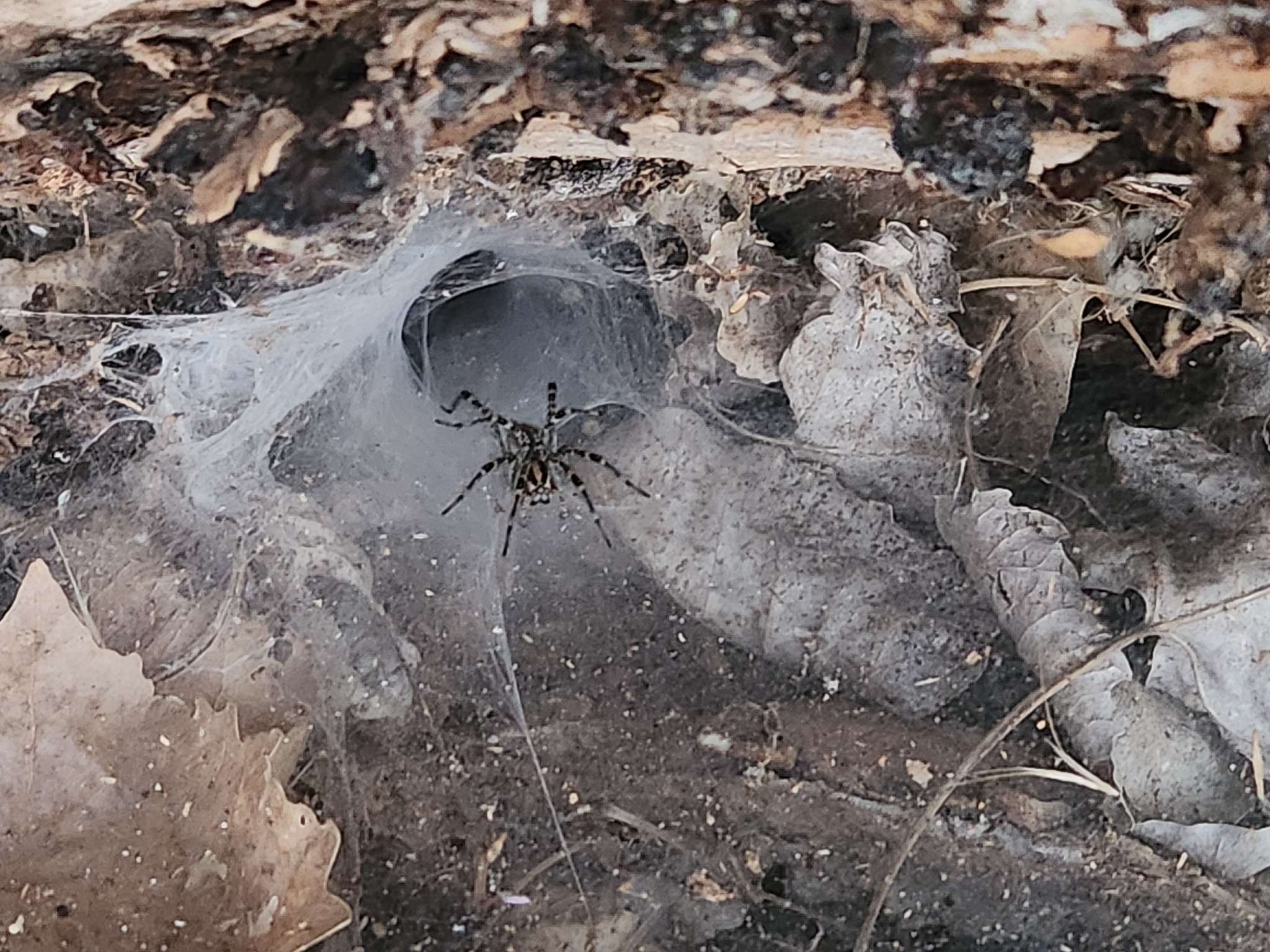
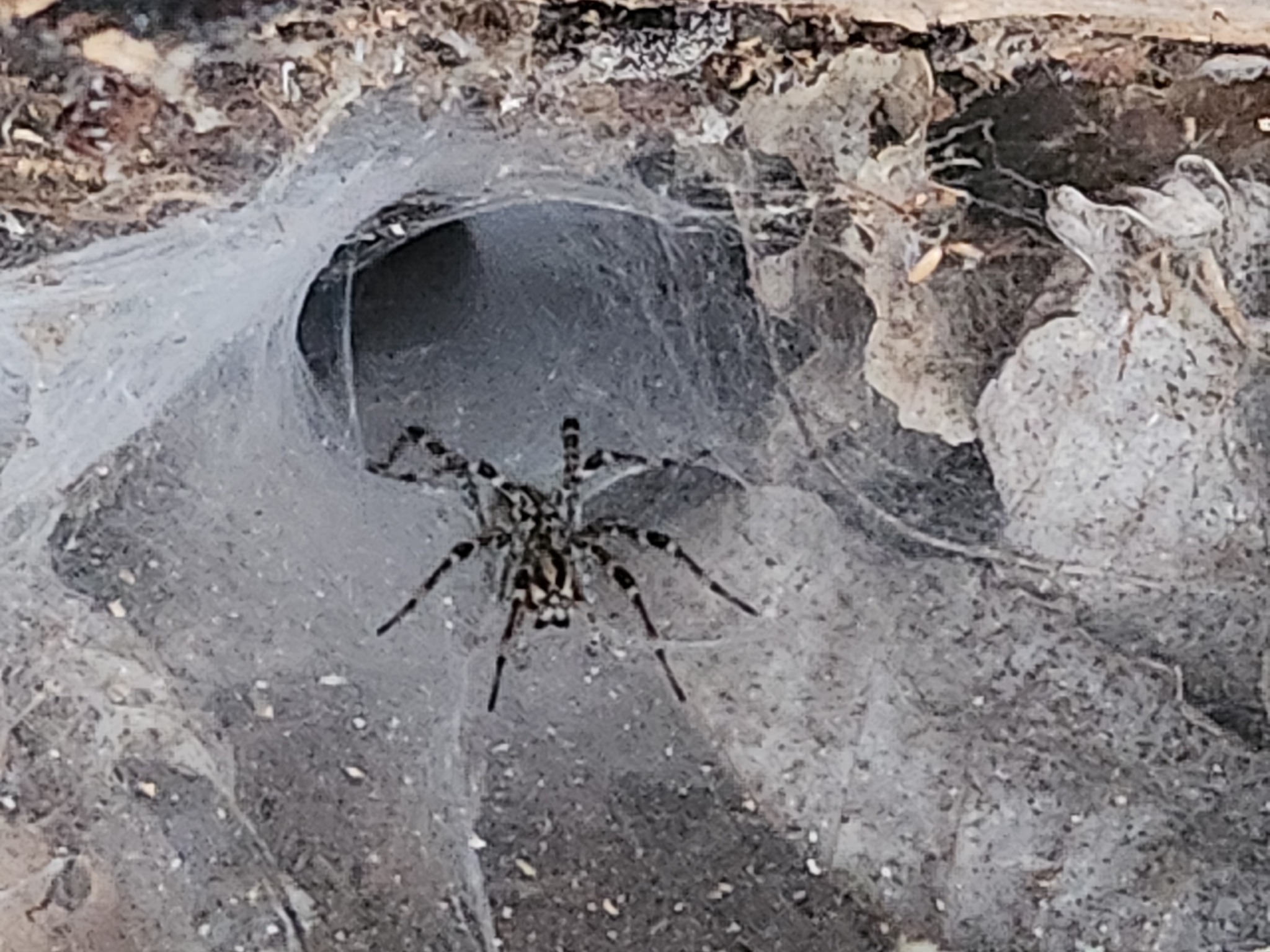
On the riverside of the Green River Golf Course lies a fallen cottonwood log that has been there for years. A large section of bark recently fell away, exposing the inner wood. Beneath the log, surrounded by cottonwood leaf litter, a funnel weaver had constructed a beautiful silken funnel. I returned over several evenings and photographed the same spider deep inside her retreat, fully emerged at its entrance, and standing on the sheet of her web. Unlike the crevice weaver, she was reliably there each time I returned.