Sunday afternoon, my husband rushed into the house, drenched in sweat and shouldering a heavy bag of dog food from the weekly Costco run. He dropped the bag, straightened up, and took a deep breath. As he exhaled, he said, “Whew! Who turned the heater on?!” His flushed face, still damp with perspiration, told the full story - it was cookin' outside.
It's deep summer in our little bend in the river. We've experienced sustained triple-digit temperatures for the past two weeks, accompanied by unusually high humidity drawn north by tropical systems in the eastern Pacific. Stepping outside in late August feels like walking into a wall of superheated air. I find myself leap-frogging between pockets of shade on my driveway all to avoid broiling under the direct rays of the sun.
It's not the easiest time of the year to be an amateur naturalist - an exclusively outdoor preoccupation. Fortunately, misery loves company, and my friends are quick to inject some levity in our deep summer kvetch sessions. Group texts are often filled with screenshots of the weather forecast followed by blazing sun and melting-face emojis (possibly some expletives). My friend Maddie jokes that she gets a SoCal flavor of seasonal depression in August - not from the long nights of winter, but from spending the month sheltering indoors with the air conditioner.
All kidding aside, humans and our spoiled fur babies have the advantage of being able to seek refuge indoors. Of our outdoor counterparts, wildlife have it a bit better. Their mobility affords them the ability to move into shade or dens, or emerge under the cover of night. Plants don't have that luxury. Their rootedness makes them excellent phenology subjects, and remarkably patient models for photography, but it also leaves them exposed and vulnerable to sun, drought, pests, and every other environmental pressure that comes their way. In deep summer, plants face nature's starkest ultimatum: endure through their adaptations or perish.
Summers in Southern California's Mediterranean climate are not only hot, they're unusually dry, particularly when compared to the rest of the Northern Hemisphere this time of the year. Along the Yorba Linda-to-Corona stretch of the Santa Ana River, we average less than an inch of rainfall in the summer season. In comparison, average precipitation reaches its annual peak in July and August across the globe, driven largely by the Northern Hemisphere's great summer monsoons.1 In many places, the longest and brightest days coincide with abundant rain and vigorous plant growth. Southern California lives by an inverted calendar. Here, intense summer sunlight coincides with months of little rain, and growth gives way to conservation.
Yet California remains a global biodiversity hotspot. Its varied geography, soils, elevations, and climates support thousands of native plant species, many found nowhere else on Earth. Much of that diversity reflects life evolving under conditions that are not merely difficult, but highly specific.
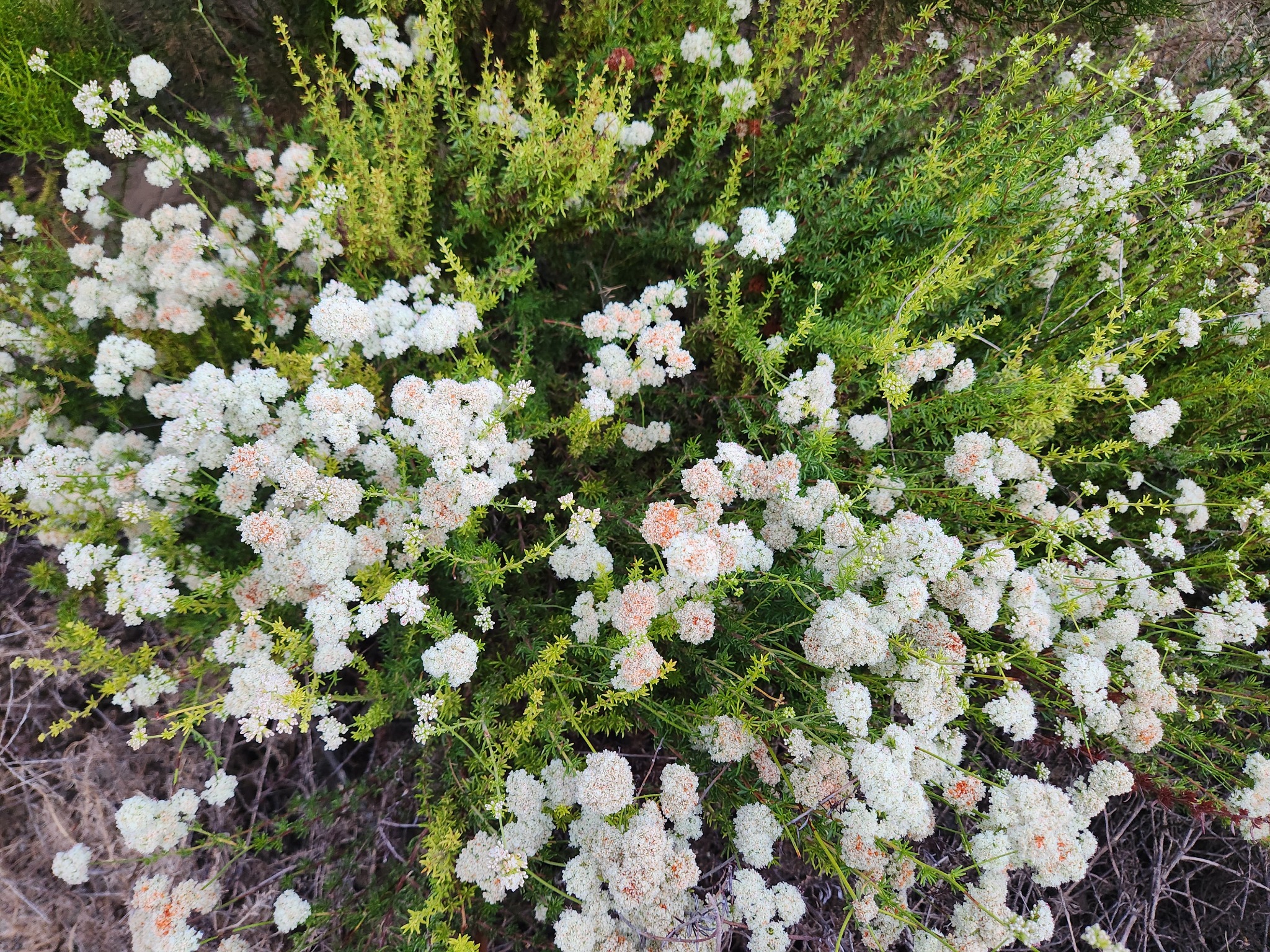
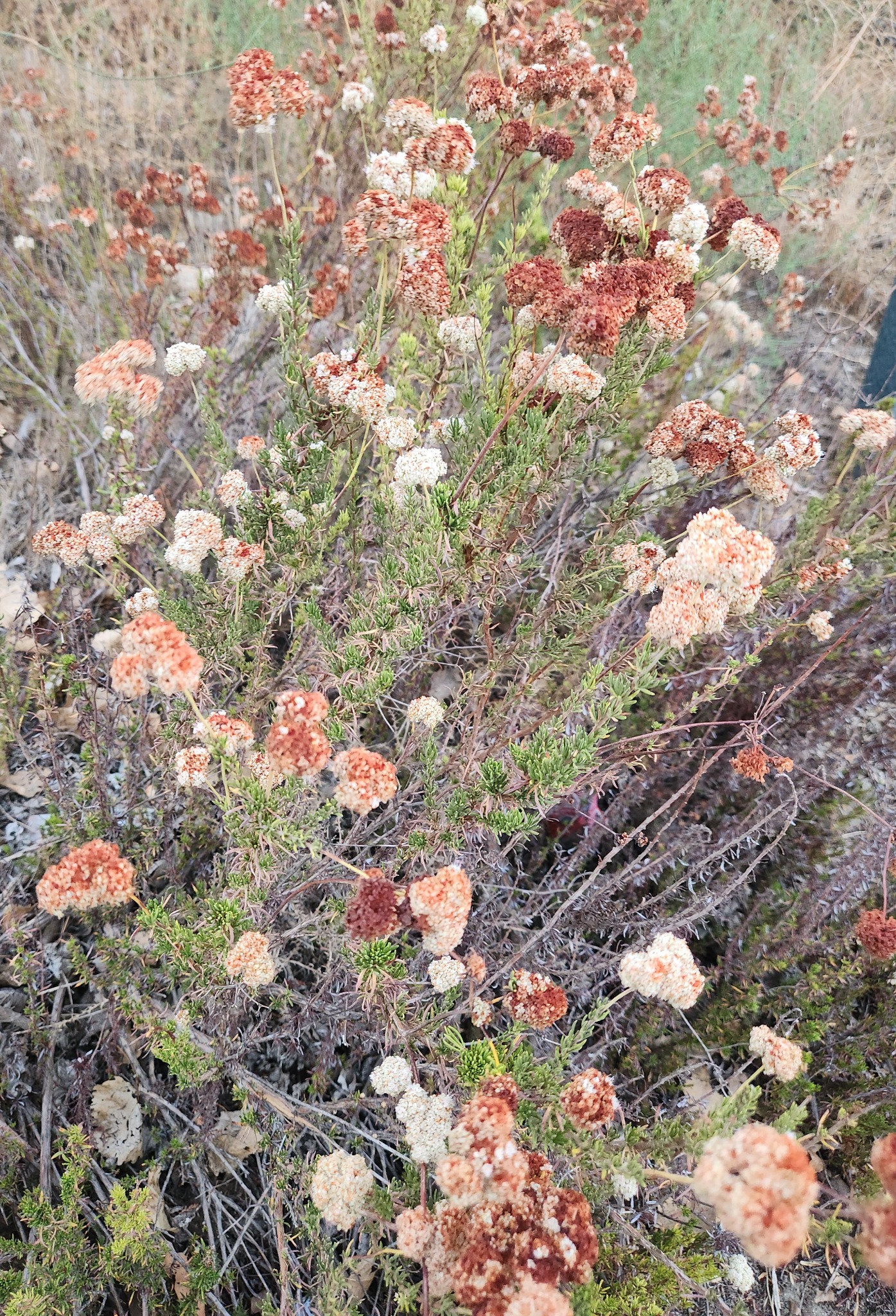
Plants native to this region have evolved several strategies for surviving deep summer, once again demonstrating nature's impressive ingenuity. One of my favorites is the California buckwheat (Eriogonum fasciculatum), a drought-tolerant shrub with small, leathery, almost rosemary-like leaves, that produces clusters of small white flowers that resemble popcorn balls. In May, the roadways and hiking trails around here are covered in white, puffy floral displays, but over the course of the summer as the soil dries and the effects of prolonged sun exposure begin to compound, the buckwheat takes on a different appearance. To conserve water, its flowers slowly dry and transform into a cinnamon-rust color that glows in the late afternoon sun. By fall, the buckwheat has set seed and is surrounded by spent, amber-colored flowers and dried flowering stems. By relinquishing the season's reproductive growth, the living core of the plant can conserve its resources and wait for winter rain.
 © Lindsey Thome
 © Lindsey Thome
California buckwheat flower clusters at different stages of flowering and seed production.
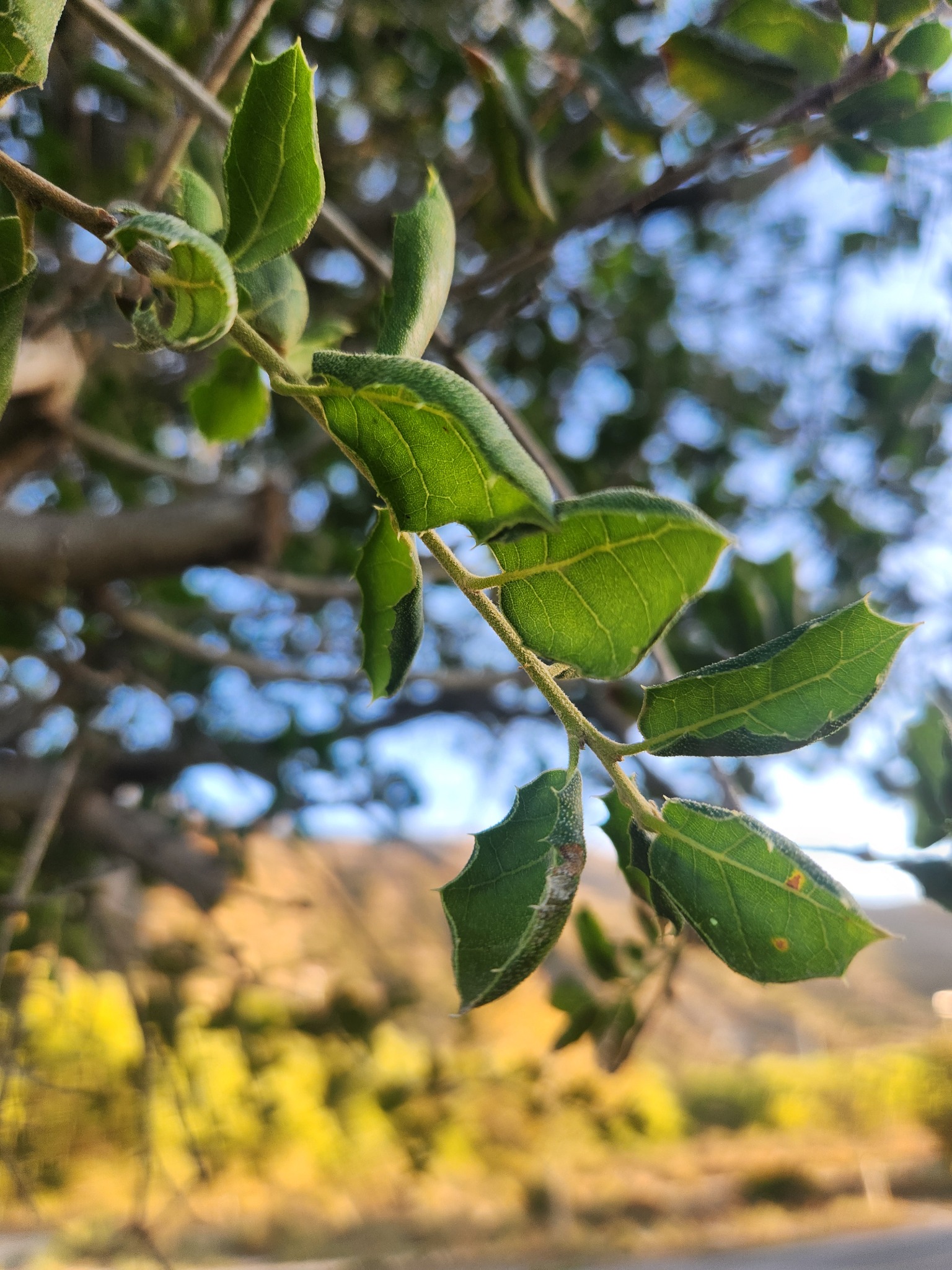
Other plant species in the local sage scrub, chaparral, and oak woodlands communities have adapted to drought by employing different tactics during the summer-dry seasons: some reduce growth and transpiration, while others become drought-deciduous and shed their leaves. Others retain leaves that are small, waxy, hairy, gray, curled, or leathery - one of the best examples is the coast live oak (Quercus agrifolia). Its leaves are already built for drought: small, thick, leathery, and often edged with spines. By deep summer, some curl inward or darken, subtle changes I might once have dismissed as damage. Now I read them as part of the tree's effort to limit water loss while its acorns continue to develop. Because the coast live oak keeps its leaves year-round, it offers an unusually good record of seasonal change - not through disappearance and return, but through shifts in color, texture, and posture.
 © Lindsey Thome
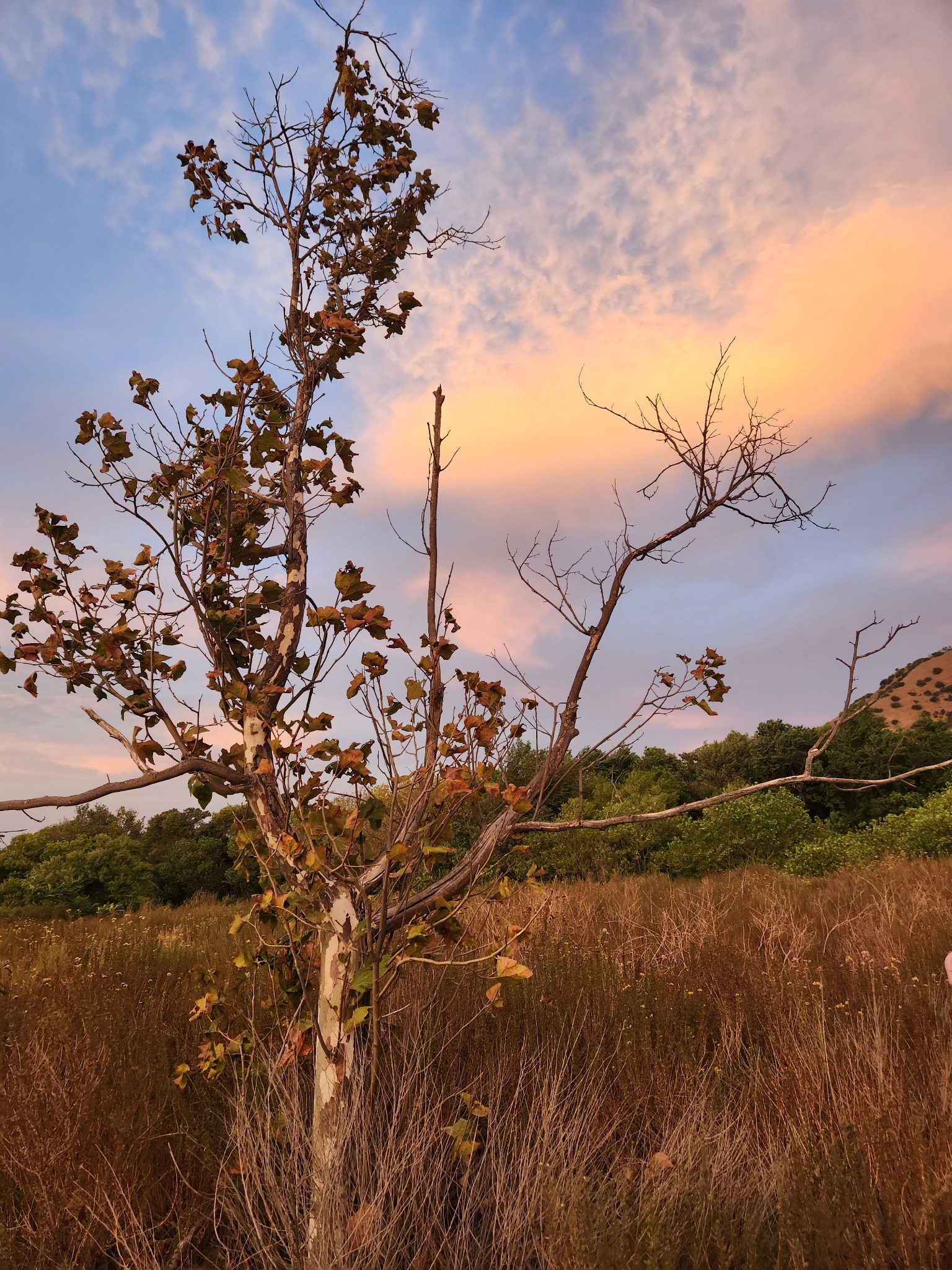
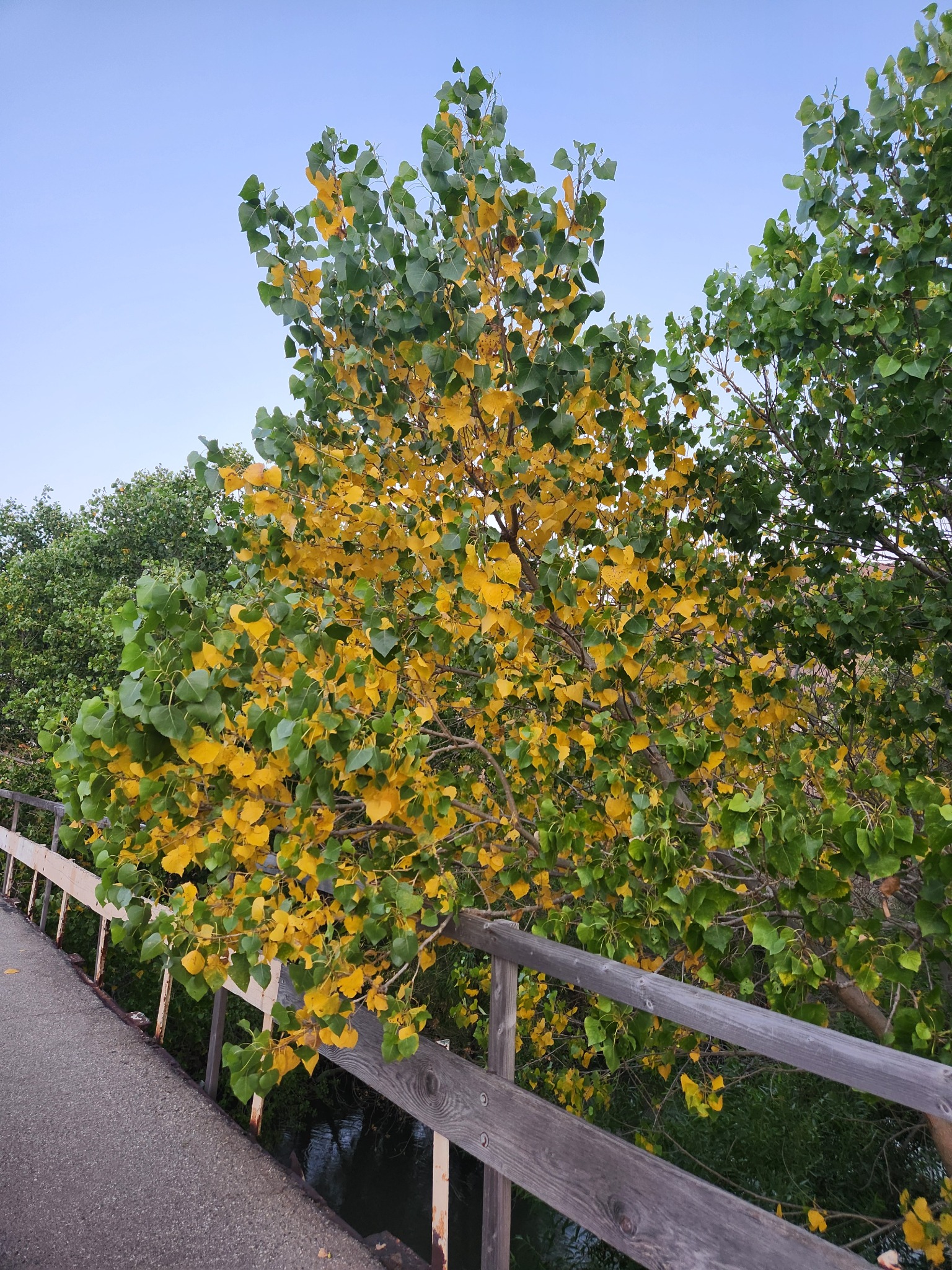
The watershed contains its fair share of annual plants, such as California poppies and lacy phacelia, which were abundant in spring blooms, but have all withered, dried, and set seed by August. These native annuals complete their life cycles and persist as seed, preparing the next generation to germinate with the winter rains. We also have a number of riparian trees, such as cottonwoods, willows, and sycamores, which follow a more familiar deciduous rhythm: their leaves yellow and drop in fall, bare branches remain in winter, and new leaves emerge in spring. The Santa Ana River is lined with a dense, vibrant green canopy of these riparian species in the summer and they stand in stark contrast to the dry, golden grasses and deep, dark green of the native shrubs in the nearby hills and mountains. To a casual observer the trees lining the river appear as the only signs of life in the broader landscape of plants holding their breath.
 © Lindsey Thome
I've spent a lot of my career educating people about drought resilience, climate-appropriate landscaping, and the superpowers of California native plants to survive on what nature is willing to give. Most folks are impressed by their low water needs and their variety of floral displays, but many can't get over their appearance in late summer and fall. I once attended a lecture by California Master Gardener Kay Havens, where she discussed the disconnect of society's expectations of landscape aesthetics and the ecological reality in Southern California. She described our collective tolerance for winter dormancy and acceptance of naked boughs and branches in January, but this is not a courtesy we extend to the summer-dormant plants in our local environment. Many Southern Californians come from the Midwest or East Coast, or other countries with different climates where summer is often bathed in rain and greenery. We install plants from those summer-wet climates and irrigate our landscapes to preserve a year-round green aesthetic. Then we lament the golden, “crispy” appearance of the chaparral in summer, when California's native plants are doing exactly what they evolved to do - survive a challenging season, while most of us huddle indoors in the air conditioning and run our sprinklers as life support for large-leafed or blue-grassed interlopers.
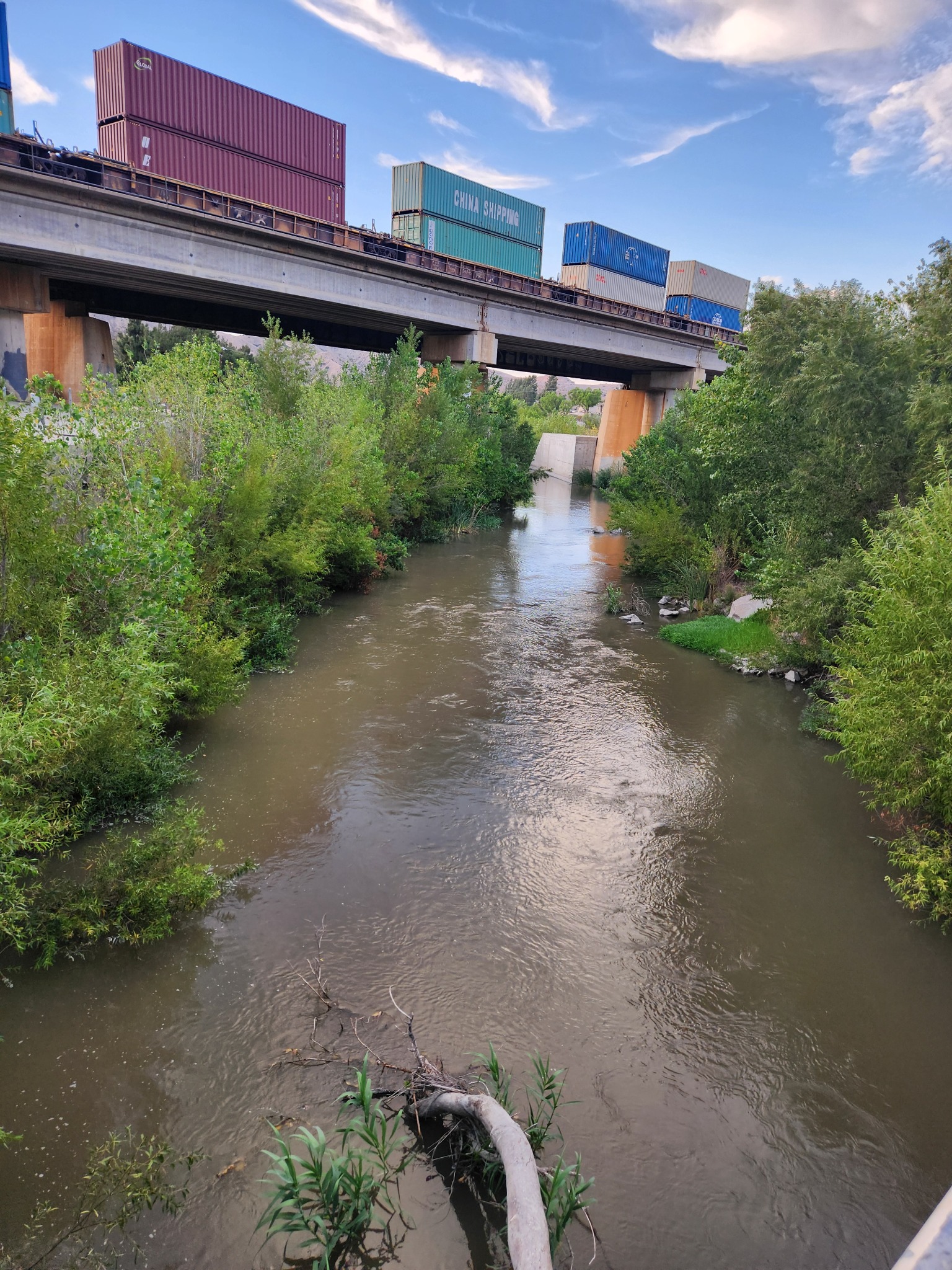
On this Sunday evening, as I look around our usual haunt on the Santa Ana River, I see the signs of deep summer everywhere. The California buckwheat has begun to rust, once-vibrant thistles are now desiccated husks, and mustard-colored leaves are appearing on the sycamores. The water in the river is low enough that rocks are beginning to break through the surface. Above, a freight train rests on the bridge, its stacked shipping containers forming a second river of movement through the corridor - a reminder that the Santa Ana River corridor transports more than water. Wildlife, commerce, infrastructure, and the river itself all follow this narrow passage between the hills and mountains.
 © Lindsey Thome
But in the immortal words of Journey, “The wheel in the sky keeps on turning.” Soon, the raging sky furnace will weaken and cooler nights will return. Some of the signs are already here. The acorns on the coast live oaks are ripening, and the cottonwood canopies are speckled with yellow leaves. The bats at the Green River bridge have been leaving their roost earlier as nightfall comes sooner. Even the forecast offers a hint: overnight temperatures in the high 60s, a welcome departure from the record-breaking nighttime heat that defined late August.
The long exhale we have been waiting for may be only a shallow sigh. Autumn brings longer nights, but it also brings the possibility of Santa Ana winds - another kind of heat moving through the canyon. El Niño is strengthening, and whatever comes next is not guaranteed. The landscape simply meets each season with the strategies it has inherited - curling, shedding, setting seed, holding fast, and waiting for rain.